
East Tennessee is heading into an unusual winter. Forecasters are tracking a very strong El Niño, and the early signals point to a soggy fall followed by a January and February that could turn colder than the mild start suggests. For homes that rely on ductless systems, that mix of rain, ice, and sudden temperature drops is exactly the kind of weather that separates a well maintained unit from one that quits on the coldest night of the year.
Mini splits are efficient, quiet, and flexible, which is why so many Knoxville area homeowners use them for bonus rooms, additions, garages, and whole homes. But the outdoor unit sits exposed to everything the sky throws at it. When freezing rain coats the coil and fan, small problems become no heat calls fast. Knowing what to watch for, what you can safely handle yourself, and when to search for mini split repair near me keeps warm air flowing all season.
Keynotes worth knowing before winter arrives:
- NOAA’s seasonal outlook gives parts of the Southeast a 60% to 70% chance of above normal precipitation from October through December, which means more rain and ice landing on outdoor mini split units than in a typical fall.
- The U.S. Department of Energy notes that duct losses can account for more than 30% of energy consumption for space conditioning, so a working ductless system saves money that a patched together backup setup gives away.
- According to the Department of Energy, heat pump technology can cut electricity use for heating by roughly 50% compared to electric resistance heat like baseboard and space heaters, which is exactly what many families fall back on when a mini split fails and the search for mini split repair near me gets delayed.
What a Super El Niño Winter Means for Your Mini Split
The weather pattern shaping this season is more than a headline. It changes how hard your ductless system works, which parts are most likely to fail, and how often homeowners across the region will be searching for mini split repair near me once the cold settles in.
A Wet Fall Followed by a Possible Cold Turn
A strong El Niño tends to push the storm track across the southern United States. For East Tennessee, that points to frequent rain through late fall and early winter, and long range guidance hints that January and February could run below average. Tennessee sits in a transition zone, so nothing is guaranteed, but the setup favors more moisture and more days hovering near freezing. That combination is harder on outdoor equipment than steady, dry cold.
Why Freezing Rain Is Harder on Ductless Units Than Snow
Snow is light and often blows off an outdoor unit. Freezing rain is different. It lands as liquid, then locks onto the fan grille, the coil fins, and the cabinet as a solid glaze. A thin coat of ice acts like a blanket over the coil, blocking the airflow the system needs to pull heat from outside air. Heavy glaze can even stop the fan blade from turning, which is one of the most common reasons behind mini split repair near me searches after an ice event.
How Temperature Swings Stress the System
Rapid swings from the fifties to the twenties put extra strain on a ductless system. Water that collects in the base pan during a rainy afternoon can freeze solid overnight. Refrigerant pressures shift quickly, and the unit spends more time in defrost mode. Each cycle is normal on its own, but dozens of them in a week expose weak parts, loose connections, and aging sensors that might have gone unnoticed in a milder year, which is when homeowners start looking for mini split repair near me.
Warning Signs Your Mini Split Needs Repair This Winter
Ductless systems usually give plenty of warning before they fail completely. Catching these signs early is the difference between a quick mini split repair near me call and a cold house on a freezing weekend.
Weak or Lukewarm Airflow From the Indoor Head
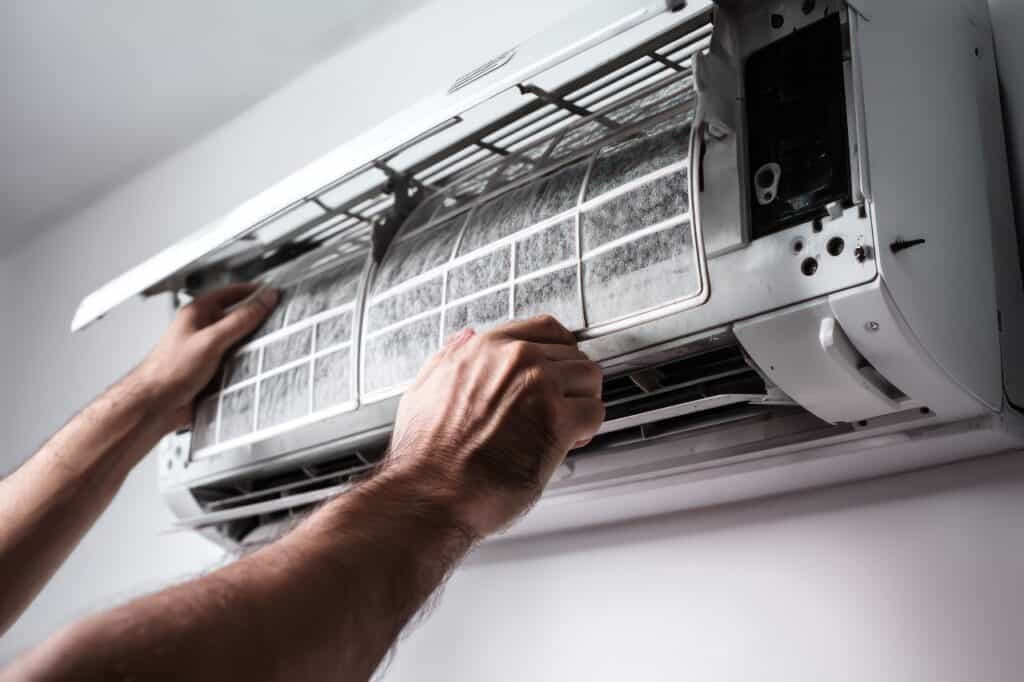
If the indoor unit is running but the air feels barely warm, the outdoor coil may be iced over, the filters may be clogged, or the system may be low on refrigerant. A clogged filter is an easy fix you can handle yourself. Lukewarm air that continues after the filters are clean usually points to a refrigerant or compressor problem, and that is the moment to search for mini split repair near me.
Blinking Lights and Error Codes
Most mini splits display a blinking light pattern or a code on the indoor head when something goes wrong. These codes can point to sensor faults, communication errors between the indoor and outdoor units, drainage problems, or overheating components. Write down the pattern or take a quick video before you reset anything. That information helps the technician answering your mini split repair near me call diagnose the problem faster and often shortens the visit.
Ice That Will Not Clear on the Outdoor Unit
Some frost on the outdoor coil is normal in cold, damp weather, and the defrost cycle should melt it within a few minutes. When ice keeps building, covers the entire coil, or stays in place for hours, the defrost system is not doing its job. A failed defrost sensor, a bad base pan heater, or a blocked drain are common culprits, and all of them get worse the longer the unit runs frozen.
What Freezing Rain Actually Does to a Ductless System
Understanding the damage helps you see why a quick fix after an ice storm often prevents a much bigger and more expensive mini split repair near me call later in the season.
Iced Coils and Blocked Airflow
A mini split in heating mode works by pulling heat from outdoor air across the coil. Ice on the coil blocks that air, so the system runs longer while delivering less warmth. Left alone, the compressor works under strain, energy use climbs, and indoor rooms never quite reach the thermostat setting. Clearing the ice and finding out why it formed is the heart of most winter mini split repair near me visits.
Damaged Fan Blades and Motors
When freezing rain glazes the fan grille, the blade can freeze in place or strike ice as it tries to spin. That can crack plastic blades, bend metal ones, or burn out the fan motor as it struggles against the resistance. You may hear scraping, rattling, or humming without movement. Turning the system off at that point protects the motor and gives a technician a better chance of saving the part during a mini split repair near me visit.
Power Surges and Control Board Failures
Ice storms bring downed limbs and flickering power, and those surges travel straight into the circuit boards inside your mini split. A board that took a hit may cause random shutdowns, an unresponsive remote, or error codes that clear and then return. Surge protection installed at the outdoor disconnect is an inexpensive safeguard, and it is worth asking about during any winter mini split repair near me visit.
What You Can Safely Do Before Calling for Service
A few simple steps can restore heat or at least keep a small problem from growing. Anything beyond these steps belongs in the hands of a trained technician who handles mini split repair near me calls every day.
Check Power, Filters, and the Remote First
Start with the basics. Confirm the breaker has not tripped, the outdoor disconnect is on, and the remote has fresh batteries and is set to heat mode. Then open the front panel of the indoor head and check the filters. Dirty filters restrict airflow and make every other winter problem worse. Rinse them with lukewarm water, let them dry completely, and slide them back into place.
Clear Snow and Ice Without Damaging the Unit
Gently brush loose snow off the top and sides of the outdoor unit and make sure nothing is blocking airflow around it. Never chip ice off the coil with a screwdriver, ice scraper, or any sharp tool, since the aluminum fins bend and puncture easily. Pouring boiling water on the unit can also cause damage. If heavy ice will not clear on its own, turn the system off and search for mini split repair near me.
Know When to Stop and Call a Pro
If the system shows an error code again after a reset, the fan will not spin, you hear grinding or loud buzzing, or the indoor unit leaks water, it is time to book mini split repair near me. The same goes for any burning smell or signs of a refrigerant leak. Continuing to run a struggling unit can turn a simple sensor replacement into a compressor replacement, which costs far more.
Choosing Mini Split Repair Near Me in East Tennessee
When the heat stops on a freezing night, you want a local team that knows ductless equipment and can get to your door quickly. Here is what to look for when you search for mini split repair near me.
Why Local Experience Matters for Ductless Systems
Mini splits have their own parts, diagnostics, and installation standards, and not every HVAC company works on them regularly. A local technician who services ductless systems across Knoxville, Lenoir City, Hardin Valley, Halls, and the surrounding communities knows how East Tennessee humidity and winter ice affect these units. That experience leads to faster diagnosis and fixes that hold up through the rest of the season.
Preventive Steps That Protect Your System All Season
The best mini split repair near me call is the one you never have to make. Before the coldest weeks arrive, a technician can raise the outdoor unit on a stand or wall bracket so it stays above ice and standing water, confirm the base pan heater and defrost controls work, check refrigerant levels, and clean the coil. A small overhang or drip guard can also keep freezing rain from pouring directly onto the unit from the roofline.
What to Expect From Chancey Reynolds
When you search for mini split repair near me, Chancey Reynolds is ready to help homeowners across East Tennessee keep ductless heat running all winter. Our technicians diagnose error codes, clear and repair iced units, replace fan motors and sensors, and fix refrigerant issues on the major ductless brands. We explain what we find in plain language, give you clear options, and get your home warm again as quickly as possible.
Frequently Asked Questions
Why does my mini split outdoor unit ice up in winter?
Some frost is normal when heating in cold, damp weather, and the defrost cycle should clear it within minutes. Ice that builds up and stays usually points to a defrost sensor, base pan heater, or drainage problem, or freezing rain has coated the unit faster than it can melt.
Is it safe to pour hot water on a frozen mini split?
No. Boiling water can damage components, and the runoff can refreeze around the unit. Brush off loose snow, turn the system off if heavy ice will not clear, and call for mini split repair near me.
What do blinking lights on my mini split mean?
They are error codes that point to issues like sensor faults, communication errors, drainage problems, or overheating. Record the pattern before resetting so a technician can diagnose it faster.
Can a power surge damage my mini split?
Yes. Ice storms often cause flickering power, and surges can damage the control boards in both the indoor and outdoor units. Surge protection at the outdoor disconnect helps prevent this.
Will a super El Niño make this winter colder in Knoxville?
Not necessarily. Tennessee sits in a transition zone, but long range signals point to a wet fall and a possibly colder January and February, which makes freezing rain more likely.
How can I prevent mini split problems before winter?
Clean the filters, keep the outdoor unit clear, and schedule a service visit to check defrost controls, refrigerant levels, and the base pan heater. Raising the unit on a stand keeps it above ice and standing water.
Freezing rain and sudden cold snaps do not have to mean a cold house. If your ductless system is icing up, flashing codes, or blowing lukewarm air, contact Chancey Reynolds for fast, reliable mini split repair near me service anywhere in our East Tennessee service area.